
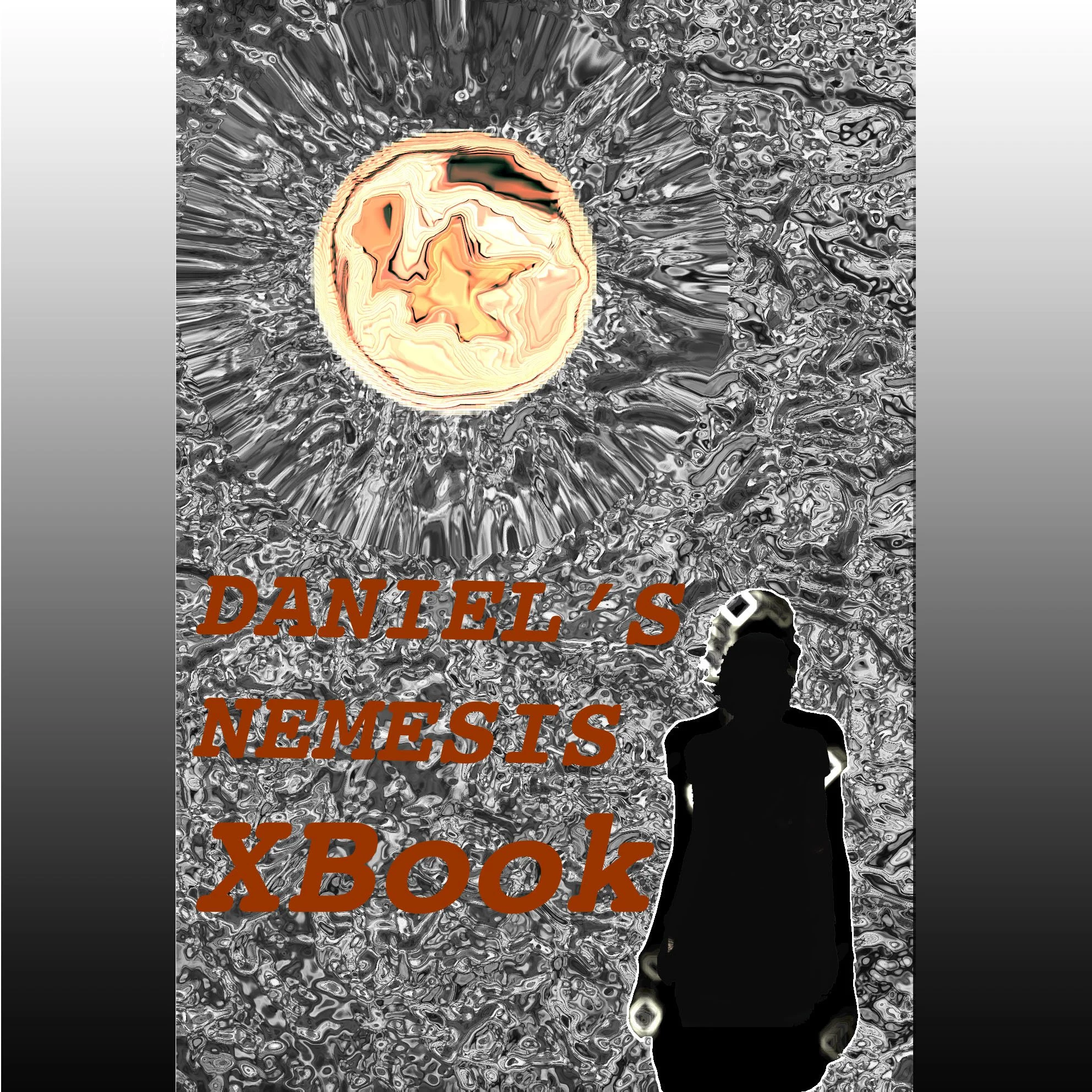
⚠️ This series contains strong language, disturbing imagery, and adult themes. Not suitable for children.
So, I did a podcast…
Have you ever written a novel, tried to get it published and have it rejected in quite severe ways? Abandon it, then dig it out twenty years later to read it out as a an audiobook with commentary afterwards analysing its many flaws?
Well, so have I!
And it gets weird. As metaphysical as a podcast can be as I enter the surreal world of my 20-year-old neurodivergent mind.
XBook is that memory you wake up to at 3 a.m. — the one where you suddenly remember that you did THAT thing. This podcast exists to confront it, publicly.
Episode Breakdown
Chapter 0 - Introduction
Welcome to Episode Zero of the Daniel’s Nemesis Podcast—a short introduction explaining what this project is, why it exists, and why it probably shouldn’t.
In this podcast, I read XBook, a surreal, dark, deeply ill-advised novel written between the late 1990s and mid-2000s by myself, and then analyse it chapter by chapter. Each episode combines fiction reading, author commentary, self-critique, and literary analysis, examining what survives time, what absolutely does not, and what it reveals about the person who wrote it.
A surreal sci-fi novel written in the early 2000s, read and analysed chapter by chapter with brutal honesty.
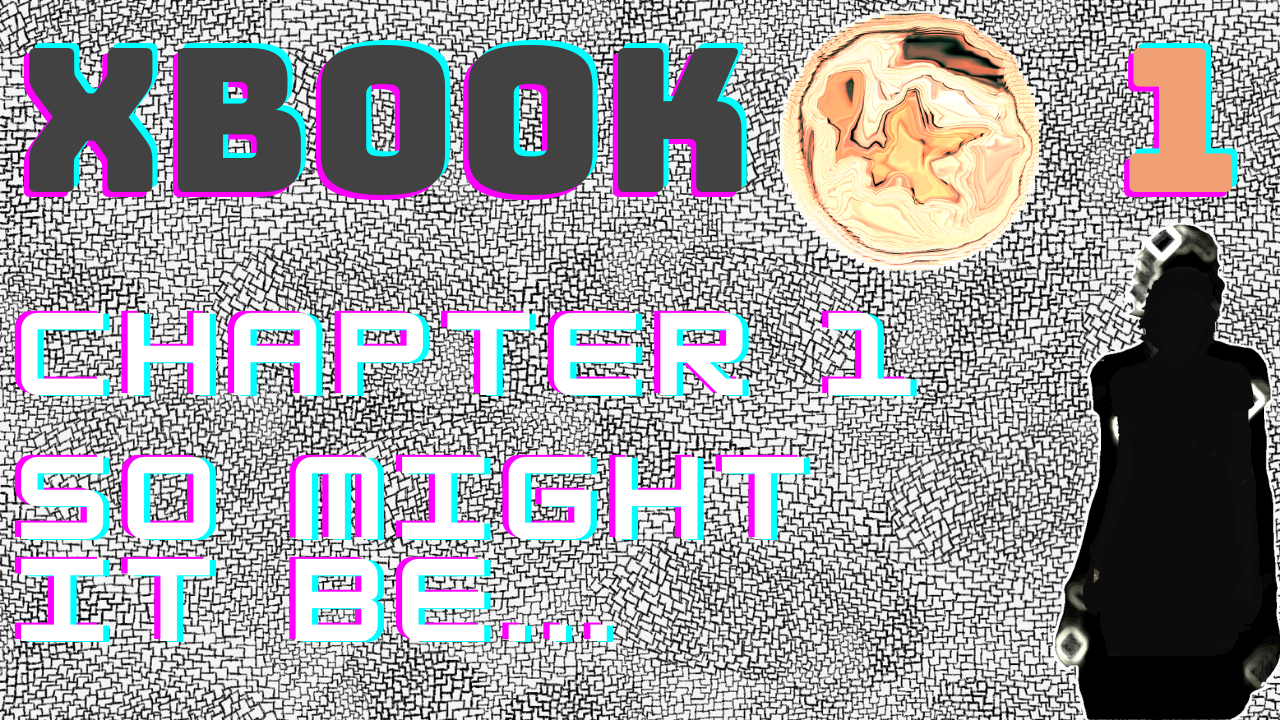
Chapter 1 - So Might It Be
The chapter frames a vast, chaotic universe where destruction and creation coexist, narrowing from cosmic scale to Earth. It introduces post–World War I Earth (1918) alongside alien travellers fleeing a dying star, both shaped by power, survival, and loss. The story sets up two protagonists—a traumatised human soldier and an alien leader—observed by a conceptual narrator, as their choices will determine the fate of worlds.
… Or Opening Chapters Should Suck, Right?
I, author Daniel’s Nemesis, begin a chapter-by-chapter reading and post-mortem of my own debut novel, XBook — an unpublished, surreal, genre-clashing novel written in the early 2000s.
This episode features Chapter One: So Might It Be, a long, abstract introduction that establishes alien evacuation, post-World War One trauma, and themes of obsession, isolation, and conflict — while doing almost nothing that writing manuals recommend.
A first reading and brutal self-analysis of XBook, a surreal alien invasion novel written in the early 2000s.
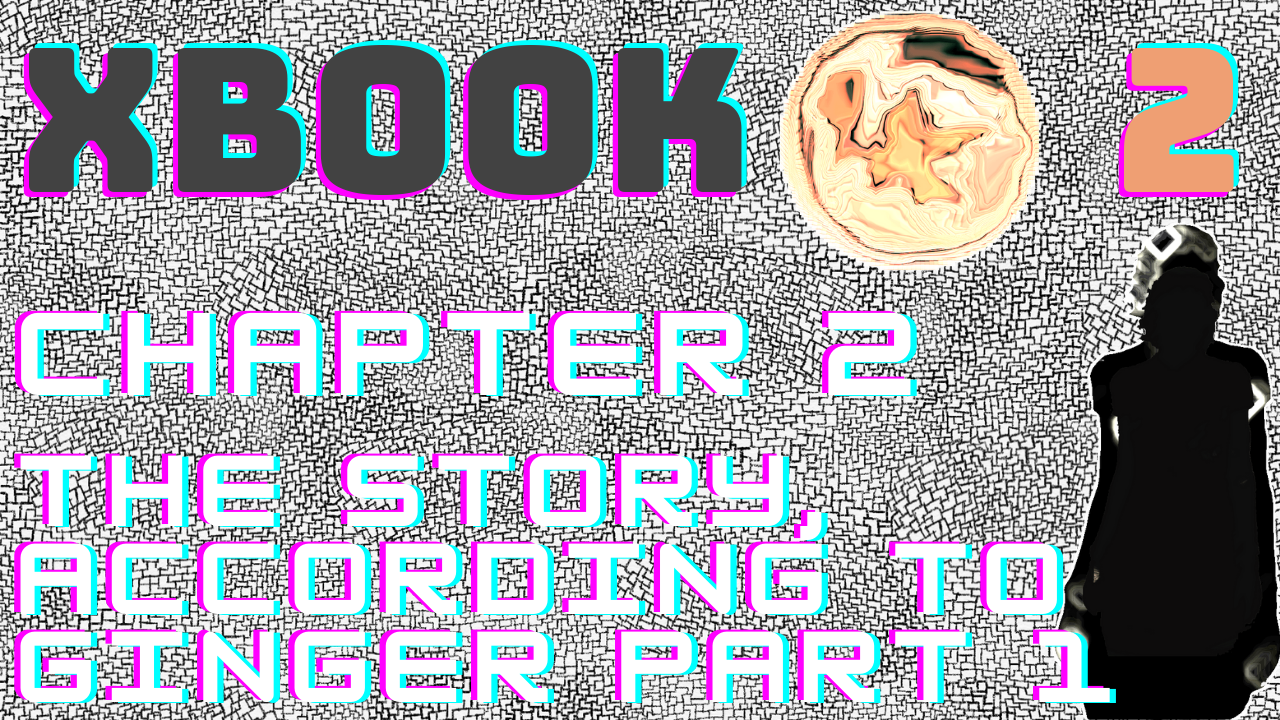
Chapter 2 - The Story According to Ginger, Part 1
Ginger Jeeves, a celebrated but arrogant WWI pilot, revels in his fame while clashing with a clearly unhinged superior over leave and imagined alien threats. Afterward, a drink in the pub triggers fragmented memories, hallucinations, and dreamlike confusion, revealing Ginger’s deep war trauma beneath his bravado.
… Or Insufferably Introducing a Beloved Character
This episode marks the first proper story chapter of XBook and introduces Ginger Jeeves, a celebrated RAF pilot struggling to adjust to life after the First World War while quietly unraveling under the weight of fame, trauma, fantasy, and entitlement.
Navigating peace, ego, delusion, and with very questionable research.
Chapter 3 - William’s Introduction to the Story
William (Skaj Frite) is introduced as a deeply isolated, self-loathing alien leader who struggles with identity and loneliness. As his fleet finally reaches Earth, he reluctantly accepts that attacking is the only remaining option, burdened by responsibility and haunted by the absence of Holly’s guidance.
… Or A Thing May Happen
This episode finally introduces William (Skaj Frite), the alien leader of the Trascon race, as the story tentatively stumbles into motion. It’s a short chapter, but an important one: for the first time, something actually happens.
Indecision, loneliness, and identity finally push the story forward.
Chapter 4 - A Ginger Story, Part 2
Ginger takes his girlfriend Dee on holiday, but fatigue triggers intrusive war memories, hallucinations, and dissociation while driving. His playful bravado collapses into vivid flashbacks of aerial combat and death, showing how deeply the war still controls his perceptions and behaviour.
… Or Should I Cut This Chapter?
In this episode, Ginger goes on holiday, nothing much happens, and I, the author, seriously consider deleting an entire chapter from my own book — roughly twenty years too late.
Questioning whether a chapter with road games, class tension, and a UFO should exist at all.
Chapter 5 - William Continues His Part of the Story
William, leader of the Trasconians, recounts his species’ centuries-long evacuation from a dying planet and their reluctant decision to settle on Earth, despite humanity already living there. Though he hopes for peaceful coexistence, fear of human resistance and the weight of ancestral obligation push him toward invasion as reconnaissance of Earth begins.
… Or The Beginnings of an OK Book?
Yes, you are once again reading a painfully naïve novel that probably should have been locked away, forgotten, and quietly burned after my death. Instead, it’s being shared — chapter by chapter — with the entire internet.
You’re welcome.
Diving into Trascon history, eco-collapse, empire, and William’s true nature.
Chapter 6 - William Discusses More of the Story
William reflects on why teleportation is impossible, exploring the scientific, philosophical, and existential problems of transporting matter, life, and the soul across space. Accepting these limits, his people resort to conventional spacecraft and issue humanity an ultimatum: talk or fight. As Earth is given one day to respond, William feels unprepared, overwhelmed, and aware that this moment will define both human history and his own failure or success as a leader.
… Or How to be Terrible at Exposition
Once again, I examine a chapter from a novel I wrote over a decade before and slowly understand why publishers kept saying no — politely, silently, or by never replying at all.
Dismantling exposition, teleporters, and ego as William derails the invasion.
Chapter 7 - Ginger Is Summoned
Ginger experiences an extended, grotesque hallucination filled with bodily distortion, surreal violence, and war imagery before waking to be summoned by the military. As reality and delusion blur, he learns that London and other major cities have been destroyed in an apparent alien invasion, forcing him to abandon leave and return to duty—confirming his long-feared belief that something inhuman was coming.
… Or Is This How to Handle a Crucial Story Point?
This episode contains:
graphic surreal imagery
existential self-analysis
and, most alarmingly, an actual plot point
Listener discretion is advised — not because it’s good, but because it’s necessary.
Examining surrealism, motivation, and the Call to Action as Ginger is summoned.
Chapter 8 - Watching Videos with William
William reflects on footage of Earth, contrasting humanity’s freedom, weather, and natural change with the claustrophobic, artificial life aboard the Trascon Mothership. Awed yet frightened by Earth’s unpredictability, he feels envy, admiration, and violent resentment toward humans as the fleet finally slows after an 850-year journey, preparing to release its ships and begin the colonisation of Earth.
… Or World-Building and How I’m Definitely Not Sebastian Faulks
I explore world-building in science fiction, focusing on perspective, exposition, and narrative structure. I also examine how character point of view shapes what readers see, what is left unsaid, and how stakes emerge organically over time.
Drawing on film theory, German Expressionism, Film Noir, and literary techniques, this episode looks at how worlds are constructed not through exhaustive description, but through selective attention—what the character notices, and why.
A deep-dive into world-building, exposition, and narrative perspective in XBook. Exploring sci-fi storytelling through film language, character POV, and narrative stakes—without spoilers.
Chapter 9 - Ginger Gets Confused
Ginger returns to the cottage in a confused, manic state, struggling to explain the alien invasion to Deidre while reality fractures around him. As he hurriedly packs to return to base, hallucinations and distorted thoughts escalate, culminating in a disturbing, dissociative farewell where Ginger can no longer tell Deidre’s real body from imagined versions of her.
+ Chapter 10 - William Takes a Break
William retreats to his room and experiences a quiet but unsettling break marked by sensory fixation, altered perception, and introspective unease. After drifting into sleep, he dreams of Holly holding keys, hinting at hidden meanings or choices he cannot yet grasp.
… Or Female Representation and OG Daniel’s Nemesis
Two Chapters are read and dissected with brutal honesty. Written in the late 1990s and early 2000s, these chapters become a lens through which issues of representation, dated writing, conflict, and artistic intent are examined from the perspective of an older, more self-aware me.
This episode blends literary self-critique, narrative theory, surrealism, and personal reflection, questioning what survives time, what doesn’t, and why some stories are written as expressions rather than products.
A reflective, critical analysis of Chapters 9 and 10 of XBook, exploring conflict, representation, cancellation anxiety, surrealism, and artistic expression in sci-fi writing.
Chapter 11 - Ginger Realises that He Is Talking to Himself
Ginger receives orders to attack aliens but experiences escalating hallucinations, disembodiment, and distorted reality during a briefing, ultimately realising he is partly talking to himself and must consciously anchor his body and identity to remain present and lead his men.
… Or Aren’t We All Just Talking to Ourselves?
A voice without a body. A mind arguing with itself.
I dive headfirst into questions of identity, consciousness, and psychological fracture.
This episode blends science fiction, surreal inner monologue, and narrative analysis, as Ginger—First World War fighter pilot and deeply traumatised “hero”—begins to question what it even means to exist.
Identity, trauma, surrealism, and the moment a protagonist realises his own voice may not be his own.
Bumper Pack Family-Sized Edition
Chapter 12 - A Goodnight Story from William,
William endures the monotony of shipboard work amid rising political tension and expectations of leadership. A tender dream of Holly—symbolising an idealised, unreachable love—briefly offers comfort before he returns to cold resolve, concluding that humanity must be violently subdued to secure control of Earth.
Chapter 13 - Ginger Parties,
On Christmas Eve in the mess hall, Ginger feels emotionally detached from the forced cheer and growing militarism. When urged to volunteer to fight the aliens, he refuses, realising—perhaps for the first time—that he does not want war, even as the crowd celebrates violence and conformity.
+ Chapter 14 - William Dreams
William stands on an alien surface for the first time, feeling both freedom and profound dislocation, fixating on the sky and on Holly’s distant presence while becoming overwhelmed by guilt, isolation, and an urge toward self-destruction.
… Or Holly, Holly, Holly, Male, Holly, Holly, Obse, Holly, Holly, ssion, Holly, Holly, Holly
Overtaken by exhaustion, fractured narration, overlapping voices, and an increasingly insistent chant of Holly, this instalment of XBook blurs the boundary between story, analysis, and breakdown. Ginger drifts out of reality. William dreams. Music overwhelms structure.
An interrupted, surreal XBook podcast episode where identity fractures, audio collapses, and Holly emerges through music, trauma, and repetition.
Chapter 15 - Ginger Finds that He Can Fly
Ginger survives an alien air battle through extreme dissociation and surreal bodily transformations, commandeers an alien craft, learns to fly it mid-combat, destroys the remaining alien ships, and retreats alone after realising the wider forces are powerless.
Content warnings:
Extreme graphic self-harm and mutilation
Graphic violence and gore
War and mass death
Psychological distress, dissociation, and hallucinations
Sexual violence imagery and explicit sexual content
Body horror
Strong language
… Or Justifying an Alien Invasion in 1918
This episode explicitly marks the transition into Act Two, often described in screenwriting theory as the point where:
The protagonist’s world changes permanently
Stakes escalate
Identity and values are tested
The analysis references narrative frameworks associated with writers such as Sigmund Freud (symbolism and subconscious interpretation) and Blake Snyder, while also acknowledging where the novel actively resists clean structural logic.
Act Two begins in XBook as alien technology collides with 1918 humanity, identity fractures, and the podcast itself struggles to stay intact.
Chapter 16 - William Talks
⚠️ Content warning: This episode contains depictions of self-harm and psychological distress.
William reflects on generations of internal war aboard a vast space vessel—driven by confinement, factionalism, religion, and nostalgia for a dying homeworld—before a present crisis escalates: missing fighter ships, mounting paranoia, and his own loss of control, culminating in a violent self-harm episode used as a way to manage rage and leadership pressure.
… Or Maybe I’m the One Who Needs to Talk
This episode contains fragmented audio, internal dialogue, and moments of disruption as the act of reading collapses distance between fiction and lived experience.
Surreal sci-fi, alien invasion, consequence, memory, and confession.